Thursday, 24 December 2015

Hostages of Climate Change

Whilst migration may offer a viable opportunity for some to reduce their vulnerability to environmental change, even this ‘last resort’ mechanism is not a possibility for all. These so called ‘trapped populations’ may find their ability to migrate hampered by confounding socio-political factors. One of the key factors in determining the capability of an individual to adapt to such situations is thought to be capital which, broadly speaking can be considered in six categories:
  • Human Capital: the capital of persons in a household, in terms of their skills, knowledge and experience possessed
  • Social Capital: the wider community networks available and also an individual’s language, accent, dialect, appearance or religion.
  • Physical Capital: physical assets such as tools, machinery, cars etc.
  • Natural Capital: land ownership and proximity to natural resources.
  • Financial Capital: access to a bank account, capacity to borrow funds or buy insurance.
  • Political Capital: access to political processes and basic human right, the extent to which they are acknowledged and provided for.

Together these determine a households’ capability to adapt, and decisions concerning the viability of migration are generally based upon capital availability. The UK Foresight report (2011) addressed the issues of trapped populations; their conceptualisation of the processes involved is depicted in the diagram below. They considered available capital to be inversely proportional to climatic change vulnerability, and directly related to the ability to move. Thus, limited capital not only heightens vulnerability to a climatic event, but also contributes to a greater level of immobility. However not all sub-categories of capital exert an equal  influence; transportation and financial capital may have a more direct bearing on the ability to move, but the presence of social networks beyond a crisis affected are would be considered an indirect capital resource.  The report summarised that environmental change is equally as likely to make migration less possible, as more probable and that that ‘trapped populations’ would be expected to become an equally as important policy concern. 

The occurrence of ‘trapped populations’ in the aftermath of recent climatic events have been discussed. Black and Collyer (2014) noted how slow onset disasters were just as likely to result in this phenomenon as sudden events, exemplified by unusual migration patterns witnessed during the Sahel droughts in the 1980s. During this period, there was a big decrease in the number of young, working age men engaging in circular migration and finding temporary employment in other countries. This is generally something that would be expected to increase rapidly at such a time, however the severity of the mass livestock loss in the hyper-arid conditions destroyed the main source of capital for the majority of people. Without stock to sell, they had no way of financing any move abroad. Thus many found themselves with no other option but to stay put.

However, these widespread and coincidental occurrences of immobility are not exclusive to poorly developed countries, with Hurricane Katrina a well-documented example Here, the widely criticised evacuation plan apparently assumed that the entire population would have access to transportation; an assumption which strongly disadvantaged the poorer, typically African American sectors within New Orleans. As Hartman (2006) discusses, a combination of inadequate disaster preparedness, structural racism and inequality, generated a catastrophe of much greater scale than it should have been. Waller (2006) poignantly notes;  ‘The difference between those who escaped with their lives and loved ones,  and those who did not, often came down to access to  a car and enough money for gas’. 

The question is; what can and be done to limit the occurrence of ‘trapped populations? Evidently, policy is incredibly important, however. it slightly contradicts the suggestions I proposed in my last post. Whilst I think it is a necessity that those who actively choose to migrate have the opportunity to do so, and in a manner which does not inflict upon their human rights, people should not feel forced into it. Additionally focussing on an adaptive strategy in the first instance should reduce the vulnerability of individual households, providing them with greater agency in making their own migratory decisions.


Tuesday, 22 December 2015

Migration as Adaptation?

There are generally three theories circulating with regards to the relationship between climate change and migration:
  1. Migration as a threat. Do climate migrants have a destabilising effect on society?
  2. A pending humanitarian crisis. How will we meet the needs of such vast influxes of people
  3. Migration as adaptation. Can migration be considered a legitimate technique to adapt to climate change?

I have focussed primarily on the first two points of discussion, however, the final most definitely needs to be considered. This idea that mobility can be used as a method of adaptation to global environmental change is by no means a new one; early human populations are thought to have been partially guided by climatic changes. For example, the first migrations of hominin into Europe are said to have coincided with a transition to more favourably temperate conditions on the continent.

This relationship has however also been discussed with regards to more recent population displacement.  Black et al. (2011) note that there are already approximately 210 million international, and 740 million internal migrants. These movements are initiated by no single driver, but are instead the result of a complex interplay of factors, which are well summarised in the diagram below. However, they do go on to say that in the coming decades the proportion of relative influences of each of these drivers will change, with the role of environmental factors becoming even more prominent than they are now. One example of adaptive migration discussed is Bangladesh, where migration into city centres has become a regular coping mechanism to escape the effects of flooding. A study found that 16% of households affected by erosion, and 22% by tidal surge floods, moved into urban areas in 2008.  


Additionally, Mcleman and Hunter (2010) discuss previous examples where migration as adaptation may have been evident in response to Hurricane events:

Hurricane Mitch (1988): This hurricane struck central America, predominantly Honduras, displacing 2 million people. In the aftermath there was an increase in the demand for people accessing the US labour markets. Temporary Protection Status was granted to 150,000 migrants, who were given a limited term visa. This was a form of temporary migration which acted to reduce the vulnerability of those involved.  

Hurricane Katrina (2005): Following the hurricane, approximately 150,000 migrants ended up settling in Houston. The return rate to New Orleans was highly correlated to those who had a home or high income, with those who settled in Houston also tended to be young and unmarried. The experience of Vietnamese people however was also found to be very different; they had many resources supplied to them from the rest of the Vietnamese population, which acted as an informal insurance policy.


Thus, these few examples suggest that in the face of environmental change, migration may offer people an opportunity to diversify their income and build resilience. However, for it to be an effective method of adaptation, the necessary channels for voluntary migration need to be made available. There is a concern that if migrants are always thought of as being ‘victims’ it may limit their capacity to adapt, particularly in the absence of adequate policy. It can also only become an effective method with the right funding, and there are questions over how this can be generated. Catastrophe bonds and risk finance may have a very important role to play in the coming years, as may climate change adaptation funds. It will be interesting to see if any of the annual $100 billion budget that was agreed upon at COP21, is targeted towards this area.

Tuesday, 15 December 2015

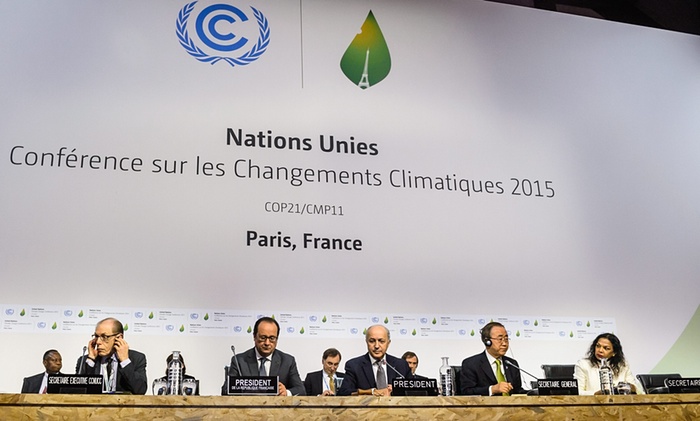
COP21: The Review

Photograph: Christophe Petit Tesson/EPA
‘By comparison to what it could have been, it’s a miracle. By comparison to what it should have been, it’s a disaster.’

This is how the Guardian summarised the Paris UN Climate talks, and I would say that I hold a fairly similar opinion. It cannot be denied that this is a momentous and pivotal moment in the development of international climate policy, and worthy of the jubilant scenes witnessed. Most notably, the undertaking of the initial commitments to reduce carbon emissions by 180 countries and the legally binding aspect of the climate fund, appear to be huge steps in the right direction.

However, whilst this outcome is no doubt progressive, the commitment to a maximum of 2 degrees warming is still incredibly high, and could render large areas of the world uninhabitable by 2100. Additionally, as it stands currently, the actual set emission targets will only limit warming to 2.7 degrees Celsius, still a long way above the original, and now seemingly unobtainable, 1.5 degree target.

In terms of the relation to this blogs' headline topic; migrants were ‘acknowledged’ within the document as having their human rights affected by climate change, but there was no direct discussion of policy regarding this. Indirectly, a number of the influential migration push factors that I have discussed (rising sea levels, drought risk, food insecurity) would be greatly improved if these new targets are kept to and further improved upon. However, depending on how the migration issue develops over the coming years, more specific ‘climate migrant’ policies may become a necessity at future conferences.

Hopefully the UK government will carry forward this momentum into 2016 and adopt an energy strategy more sufficient in meeting these ambitious carbon budgets in a cost effective and timely manner. In spite of DECC’s very positive contribution to climate policy over the years, the government’s recent energy policy has been a little more controversial. Scrapping zero-carbon targets and reductions in the level of support available for renewable initiatives have culminated in a somewhat embarrassing ‘downgrading’ of the energy efficiency rating of the UK, and are not conducive to achieving the targets set out during COP21.

The true success of this agreement will become better understood in the years to come, and will be dependent on how the framework continues to be developed during this time. Fingers crossed Obama is right in saying that this has provided us with the "best chance we have to save the one planet we have".

Sunday, 13 December 2015

Food Insecurity 2: Food Chain Reaction


As a follow on from my previous discussion, the potential implications of a food insecure world were recently simulated in a global high-level crisis scenario in the ‘Food Chain Reaction’ event. Sixty-five countries were represented, as they worked through four rounds spanning 2020-2030, depicting escalating food insecurity. Food and climate were by no means the only two factors at play here, however they were considered to exacerbate an already quite volatile setting.

A number of different, and constructive solutions were considered; early warning systems, methods to decrease food wastage, technology exchange, enhanced water management systems and a global carbon tax. One of the apparent positives from the process was that a long term, multilateral approach was preferentially adopted by all those involved, as opposed to attempting to maintain a national, short term advantage.

The full results of this event are expected to be released next month, so hopefully I will have an opportunity to discuss these, and to also see how they correlate to the COP21 discussions.

Despite being, in my opinion, a little over dramatised, I think that the information presented here is incredibly interesting and well worth a watch. The overall message of the video is clear; with an expected need to produce seventy percent more food by the middle of the century, food security is something which needs to given much greater consideration now, if we are to avoid a number of the possible scenarios discussed during this event.


Saturday, 12 December 2015

Food Insecurity

In a number of the previously discussed case studies, food security may have been a significant instigator of societal disruption. Particularly in the case of the Mayan example, a failure of their irrigation systems heavily decreased agricultural production. In a more recent example, as I explained in my very first post, the Syrian refugee crisis is thought to have been partially initiated by drought and consequential crop failure; a highly contentious proposal which Charlotte Church and Prince Charles, have become the unlikely advocates for. Tackling hunger has been described as ‘one the greatest challenges of our time’ by Wheeler and Braun (2013), and something which is expected to be complicated by numerous interrelated climate change risks in the near future.

Rising temperatures, precipitation changes, and an increase in the frequency and severity of extreme weather events are just a few of the expected implications of climate change; all of which may directly interrupt agricultural production. Hanjra and Qureshi (2010) propose that changes to water supply and demand will most significantly impact upon crop productivity, but increased flooding and land loss will also be influential. However, the effects of this food insecurity is not expected to be felt equally around the world. As discussed by Wheeler and Braun (2013), the ‘fertiliser effect’, created by an increase in atmospheric carbon may intensify crop yields in some countries. However, a net negative impact for poorer nations is predicted, with rising temperatures excepted to decrease food production closer to the equator. Almost all of the countries in the ‘alarming’ category for food insecurity, as set by the UN Food and Agricultural Organisation, are in sub-Saharan Africa. This geographical distribution in the prevalence hunger is predicted to become even more divergent in a warming climate, with those in South East Asia and Africa expected to feel this insecurity to the greatest degree.

In addition to generating numerous deleterious effects, food security is thought to intensify internal rural-urban migration, as individuals attempt to reduce their vulnerability. If we consider Syria; rapid urbanisation was proposed to have exacerbated a number of pre-existing factors already contributing to unrest. These poorer countries expected to be disproportionately effected by future insecurity, are perhaps also more likely to suffer from enhanced vulnerability from other sources. Thus, this is a situation which may play out multiple times in a warming climate scenario.

Cross-border migration is also likely to increase, and is similarly recognised as a method of trying to manage this risk. When a study by the Southern African Migration programme looked at international migration, they found that 74% of migrant sending households received remittances. Of these households, 93% predominantly spent this money on food and groceries, with no other category coming remotely close. It is possible that those in the affected areas, may become even more reliant on international migration in the future.

There is also the possibility that migration itself may be the cause of food insecurity. For example, if we look at Bangladesh, a country incredibly susceptible to flooding; future events may push an increasing number of people over the border, and into neighbouring India. Not only would this put a strain on the current resources within the country, but when you consider the fact that global warming is predicted to cause a 40% decrease in the agricultural capacity of India by 2040, continued influxes may push India into a more food insecure state than they would have otherwise been in.

Climate change will not be the only factor effecting food production, nor will migration be the only response. However, there do seem to be a number of interrelated cause and effect relationships within this. A more detailed understanding of these relationships will be imperative in developing appropriate adaptation and mitigation strategies for food insecurity, which will undoubtedly continue to impact upon a huge percentage of the global population.


Saturday, 5 December 2015

'Megadrought' & Megadeath

‘Megadroughts’ were not a phenomenon that I knew much about until recently, yet it is something that some parts of the US may become all too aware of in the near future. As the name suggests, it refers to a drought event that is extensive in both duration and magnitude, and according to a Telegraph article, poses an imminent threat to the Southwest and Central Plains regions in America. Based upon the original research by Cook et al. (2015), the article discussed the likely generation of incredibly high drought risk in this region, if there is a continuation at current emission levels.

Although, one of these events has not occurred for around 500 years, it is evident in geological and archaeological records that significant social disruption resulted from previous appearances. The most intense of these episodes has been reconstructed with tree ring data, suggesting the occurrence of a 40 year drought in the late 16th Century. It was also thought to coincide with the death of 80% of the total population of Mexico, owing to two major outbreaks of the ‘Cocoliztli’ disease. It is believed that the rodents who carried the disease increased their food seeking habits during times of drought, and consequently came into greater contact with humans. Similarly, the ‘Medieval megadroughts’ which occurred between AD 900-1300, were thought to have resulted in the mass abandonment of Ansazi settlements. In similar circumstances to the previously discussed collapse of the Maya, political warfare and religious turmoil were also believed to have been very influential, but megadrought is thought to have been a significant destabilising factor.

When this is put into the context of the current situation in the US, the possible consequences are quite disconcerting. Cook et al. 2015 believe that the extent of global warming created by a ‘business as usual scenario’ would generate greater than an 80% risk of megadrought this century; with anthropogenic warming increasing the probability of co-occurring warm and dry conditions. Such an event could last for over five times as long as the catastrophic Dust Bowl event of the 1930s, and would likely produce environmental, social and economic impacts on an unprecedented scale. An ever growing population and depleted water resources will further exacerbate this.


Droughts are considered to be ‘the world’s costliest natural disaster’ and can produce some truly devastating effects. Water scarcity is going to be one the most concerning factors to emerge from a potential increase in these types of events, and may ultimately become incredibly influential in the ability for societies to remain as they are in some of these semi-arid regions. 


An image taken during the recent California droughts, which is potentially experiencing its most intense period of aridity for 500 years. It is also a likely contender for future megadrought occurrences; a big concern considering that the region ranks first in the US in terms of population, economic activity and agricultural value. 


Tuesday, 1 December 2015

Climate Change and Collapse?

Yesterday marked the beginning of a critical fortnight in the future of climate change mitigation and adaptation. As I am remaining cautiously optimistic that COP21 will not be another Copenhagen catastrophe, I hope to be able to discuss some of the relevant outcomes of these talks over the coming weeks.

For now though, I want to obtain a more in depth understanding as to how climate may have shaped society and settlement distribution in the past. Many factors are known to impact upon societal stability, but I will aim to present the scientific evidence for a climatological influence in past collapses. I have briefly discussed this in relation to sea level rise previously, but what about the implications of an absence of water? In modern society, drought imposes significant implications economically, environmentally and socially. But it may have also been responsible for some dramatic events historically.

Recurrent periods of aridity are thought to have played a large part in the complex history of the Maya, in the Yucatan peninsular; a history which can be characterised by a cyclic rise and fall. As described by Alley et al. (2003), Mayan society flourished prior to 150 AD when the first collapse was thought to occur, evident by concurrent abandonment of many of their cities. However, it recovered and bloomed again up until 750-950 AD, where a demographic disaster resulted in the end of classic Mayan civilisation. They were a very advanced society for their time; using complex irrigation systems to allow agricultural activity in the Yucatan lowlands. However, something must have occurred which they were not able to recover from.

Haug et al. (2003) looked at the sediments within the Cariaco basin; an ideal proxy record owing to being closely situated to the former Mayan settlements, and because it is annually laminated, created by the movement of the ITCZ. Ti levels within the sediments clearly mark an increase in aridity around 760 AD, but significantly wetter conditions prior to this. Therefore, they suggest that the previously climatically favourable conditions allowed for rapid population expansion, which may have consequently exceeded the carrying capacity. Thus, when drought set in, resources were too scarce to support such an extensive society. This can be independently verified by a separate paleoclimate record in the Yucatan.

However, this incredibly complex phenomenon cannot be described by one model alone. Regional diversity in the collapse of society, is evident, which has led some to doubt the control of climatic variables. However, Haug et al. (2003) argue that the presence of a number of drought episodes superimposed upon a period of hyper-aridity may have resulted in a very drawn out process. This, in conjunction with the individual regional water resource availability, is thought to have contributed to this stagger.  

Ultimately, there is currently no single mechanism that can account for the significant demise of what was a very complex, sophisticated and seemingly advanced society. However, the increased appearances of drought years, although certainly not the only factor, does appear to have played a very important role. Thus, it will be interesting to see whether or not this serves as an analogue for the future, in what is expected to become an increasingly arid world.